
Windows & Doors — Energy Efficiency Meets Style
Free, no-obligation energy-savings estimate — call (877) 303-1544 to get started.

Windows & Doors — Energy Efficiency Meets Style
Old, leaky windows and doors are one of the biggest sources of energy loss in Southern California homes — gaps around frames let conditioned air escape and outside heat pour in, driving up cooling costs every summer. We install ENERGY STAR-rated, dual-pane windows and insulated doors with low U-factor and low-E coatings that block heat transfer while letting in natural light. The result: a quieter, more comfortable home and lower monthly utility bills, backed by professional, code-compliant installation.

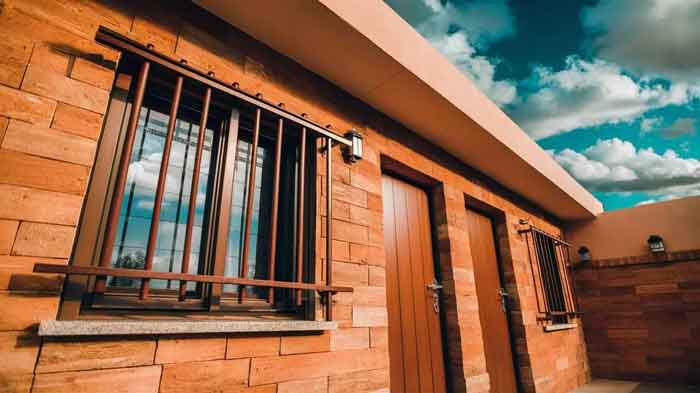
What's Included
ENERGY STAR-rated dual- and triple-pane vinyl or fiberglass window systems · Low-E, argon-filled glass packages for maximum thermal performance · Insulated fiberglass and steel entry doors with weatherstripping and sweep seals · Manufacturer-specified flashing and fastening for a fully sealed, code-compliant install · Full removal and disposal of old windows/doors · Interior and exterior trim finishing · Free in-home energy assessment and U-factor comparison
Get a Free Windows & Doors Energy-Savings Estimate
Our Services
Head Office
LA Riverside and Orange County
Phone
(877) 303-1544
How We Work
Free In-Home Assessment & Energy Audit
We inspect your existing windows and doors for drafts, condensation, and heat loss, and measure U-factor performance to identify exactly where you're losing energy and comfort.
Custom Efficiency-Focused Proposal
You receive a clear, itemized proposal matching ENERGY STAR-rated window and door systems to your home's orientation, sun exposure, and budget — with projected energy savings.
Licensed, Professional Installation
Our crew removes old units and installs your new windows and doors with manufacturer-specified flashing, fastening, and sealing for a fully weathertight, code-compliant fit.
Quality Inspection & Walkthrough
We test every window and door for smooth operation and a tight seal, clean the work area, and walk the finished job with you before we consider it complete.
Warranty & Ongoing Support
Your installation is backed by manufacturer and workmanship warranties, and our team stays available for questions or adjustments long after the job is done.
California Codes & Your Rights: Windows & Doors Done Right
Understanding Windows & Doors Under California’s Title 24 Energy Code
Every window and every door in your home is a small hole in your building envelope — a place where conditioned indoor air escapes and outdoor heat, cold, and moisture push their way in. California recognized this decades ago, and today the state’s Title 24, Part 6 Energy Code, administered by the California Energy Commission, sets specific performance standards for the windows and doors installed in homes throughout Orange County, Riverside, and the Inland Empire.
The current code cycle — the 2025 Energy Code, which governs permits pulled on or after January 1, 2026 — evaluates replacement windows primarily on two numbers: U-factor and Solar Heat Gain Coefficient (SHGC). U-factor measures how much heat moves through the window assembly; the lower the number, the better the window resists unwanted heat transfer between indoors and out. SHGC measures how much of the sun’s heat energy actually makes it through the glass; a lower SHGC means less unwanted solar heat gain during our long Southern California summers, which translates directly into less strain on your air conditioning system.
For a typical prescriptive window alteration or full replacement in an existing home, current code commonly holds windows to a maximum U-factor in the range of roughly 0.27 to 0.30, with an SHGC requirement around 0.23 or lower across most of the climate zones that cover our Orange County, Riverside, and Inland Empire service area — though SHGC isn’t mandated at all in a handful of the state’s climate zones (specifically Climate Zones 1, 3, 5, and 16). Because these thresholds are tied to your home’s exact California climate zone and the compliance path your project follows, the precise numbers that apply to your home should always be verified for your address rather than assumed from a general rule of thumb — that verification is a standard part of every estimate we provide.
There’s also a practical carve-out worth knowing about: if your project is replacing less than 75 square feet of window area, a relaxed threshold applies — up to a U-factor of 0.40 and an SHGC of 0.35 — recognizing that a small alteration project, like swapping out one or two windows, shouldn’t be held to the same bar as a full-home window replacement.
None of this is just paperwork. A window that meets today’s Title 24 performance standard is a window that keeps your living room comfortable on a 100-degree Inland Empire afternoon without your air conditioner running constantly, and keeps a chilly January morning from turning your floors and window seats into cold spots. Old, leaky, single-pane windows — and even aging dual-pane windows with failed seals — are notorious for drafts, condensation between the panes, and noticeably higher utility bills. Swapping them for code-compliant, professionally installed replacements is one of the most reliably cost-effective energy upgrades a homeowner can make, and it’s an upgrade you feel immediately, not just one you read about on a utility statement.
Doors matter here too, and they’re easy to overlook. Exterior doors, especially those with significant glass area — French doors, sliding glass doors, and entry doors with sidelites — are evaluated under the same energy framework and can be a major source of drafts and heat gain if they’re older, poorly weatherstripped, or simply mismatched to your climate zone. A door that doesn’t seal tightly against its frame can undo the benefit of even the best windows in the rest of the house.
At Genesis Home Renovations, every window and door project starts with identifying your home’s applicable climate zone and the correct compliance path, then specifying products that meet or exceed the current Title 24 requirement for your specific project type — so the comfort and savings you’re expecting on paper actually show up in your home, room by room.
Licensing, Permits & Inspections for Window & Door Replacement
Window and door replacement sits at an interesting spot in California’s contractor licensing system, and knowing which license classification applies — and why — helps you evaluate any contractor’s qualifications with confidence before you ever sign a contract.
The California Contractors State License Board (CSLB) maintains a specialty classification, C-17 (Glazing Contractor), built for exactly this kind of work: selecting, cutting, assembling, and installing glass, glass work, and glass-substitute materials for glazing, along with the fabrication and installation of the frames, panels, sashes, and doors that hold that glazing in place. For a straightforward window or door replacement, a C-17 license is the specialty classification most directly on point.
That said, not every window and door project stays in C-17 territory. When a project involves structural framing changes — a new or modified header, an enlarged or relocated rough opening, or work that spans several unrelated trades at once, such as window replacement bundled with structural or electrical scope — contractors sometimes hold or bring in a B-General Building license instead, since that classification is built around exactly that kind of multi-trade, structural work. There isn’t one precise bright-line rule for when a project must shift from C-17 to B-General; it depends on the specifics of the work involved. A properly licensed contractor should always be able to explain, in plain terms, which classification applies to your project and why — and should never be vague about it.
Whichever classification is doing the work, every active California contractor license today sits behind a $25,000 surety bond. That amount was raised from the previous $15,000 by Senate Bill 607, effective January 1, 2023, specifically to give homeowners a stronger financial backstop if a licensed contractor fails to meet its obligations. You can, and should, verify any contractor’s license number, bond status, and standing directly through CSLB before signing anything — it takes only a few minutes and it’s free.
Workers’ compensation insurance is another piece of the picture worth understanding. Any licensed contractor with employees is required to carry workers’ compensation coverage, and five specific trade classifications are required to carry it regardless of how many employees they have. A broader mandate requiring workers’ compensation for every licensed contractor, regardless of employee count, exists under Senate Bill 216 but was pushed back by Senate Bill 1455 to take effect January 1, 2028 — so it isn’t yet a universal requirement today, which makes it worth asking any contractor directly about their current coverage rather than assuming.
Permits and inspections are the other half of doing this correctly. Most California cities require a building permit for window and door replacement whenever the project changes the size of the rough opening, converts a window to serve as a required egress opening, alters structural framing, or falls inside a historic district or historic overlay. A true like-for-like replacement — same opening, same window type, no framing changes — is commonly, though not universally, treated as exempt from permitting in many jurisdictions. Because these exemption thresholds are set city by city rather than by one statewide rule, the right move is always to confirm the requirement with your specific local building department before work begins — which is exactly what a properly licensed, permit-savvy contractor handles on your behalf as a normal part of the process, and something we verify for every Orange County, Riverside, and Inland Empire project before the first window ever comes out.
Egress, Safety & Permit Rules for Window & Door Replacement
Beyond energy performance, California’s building code treats certain windows as life-safety equipment — and bedroom windows are the clearest example. Under the California Residential Code (Section R310), every sleeping room is required to have at least one emergency escape and rescue opening: a window or door sized and positioned so a person can get out, and a firefighter can get in, during an emergency.
The specific numbers matter here, and they’re worth knowing even if you’re not a code expert. A qualifying egress window must provide:
- A minimum net clear opening of 5.7 square feet (5 square feet is allowed for openings at or near grade level or below-grade)
- A minimum clear width of 20 inches
- A minimum clear height of 24 inches
- A finished sill height no more than 44 inches above the floor
All of these dimensions describe the actual clear opening once the window is operated, not just the overall frame size — which is why swapping a bedroom window for a similarly sized but differently configured replacement can sometimes accidentally take a home out of egress compliance if it isn’t checked carefully. A window that looks like an equivalent, reasonable substitute on the showroom floor can quietly fail one of these four measurements once it’s installed.
This is one of the most common — and most avoidable — mistakes in DIY or under-licensed window replacement: installing a bedroom window that fits the existing rough opening and looks right, but that doesn’t actually open wide enough, high enough, or low enough to the floor to meet the egress standard. A licensed contractor checks this on every bedroom window replacement, not just in new construction, because the requirement applies whenever a bedroom window is being replaced in a way that affects its function as an escape opening.
Permitting rules connect directly to all of this. As covered above, a true like-for-like replacement — same rough opening, same window type, no structural changes — is commonly treated as exempt from a building permit in many California cities. But the moment a project does one of the following, a permit is typically required: the opening size changes, the window is being converted specifically to satisfy egress, structural framing is being altered (a new or enlarged header, for example), or the home sits within a designated historic district where additional design review applies. Because these exemption thresholds and review processes are set by each city’s building department individually rather than by one uniform statewide rule, the only reliable way to know for certain whether your specific project needs a permit is to confirm it with your local building department — a step that should happen before, not after, work begins.
Doors carry their own safety considerations too. Proper flashing and weatherproofing at the door frame prevent water intrusion into the wall assembly, correct swing clearances keep doors functioning safely for everyone in the household, and for sliding and French doors with large glass panels, adherence to safety glazing requirements in locations near floors, stairs, tubs, and other hazardous locations helps prevent serious injury if the glass is ever struck or broken.
None of this needs to be intimidating for a homeowner. It simply means that a window or door replacement — even one that looks simple from the driveway — touches life-safety code, structural considerations, and local permitting rules all at once, which is exactly why this work belongs in the hands of a properly licensed, experienced contractor who checks egress dimensions, confirms permit requirements with your city, and pulls the right paperwork before a single window comes out.
Your Rights as a California Homeowner
California gives homeowners a specific, detailed set of legal protections when they hire a contractor for home improvement work — and knowing what those protections actually say, and don’t say, helps you go into a project with confidence instead of guesswork.
Start with the contract itself. Under Business and Professions Code Section 7159, any home improvement contract where the total price — labor and materials combined — exceeds $500 must be in writing and signed by both parties. That written contract is required to include specific elements:
- The contractor’s name, business address, and license number
- A clear “Home Improvement” heading on the document
- Approximate start and completion dates
- A description of the work to be performed and the materials to be used
- A payment schedule tied to the work performed
- A mechanics lien warning
- A CSLB consumer-information notice
- Disclosure of the contractor’s insurance
- Where applicable, a notice of your right to cancel within three business days
If a contractor hands you a handshake deal or a one-page estimate with none of this on it, that’s a red flag worth pausing on before you commit.
On deposits: California law caps how much a contractor can collect upfront. Under Business and Professions Code Section 7159.5, a down payment cannot exceed the lesser of $1,000 or 10% of the total contract price — whichever amount is smaller. A contractor asking for a large upfront deposit well beyond that cap is not following California law, full stop, and that’s worth questioning immediately.
The three-business-day right to cancel is real, but it’s important to understand its actual scope rather than assume it applies to every contract you sign. Under Civil Code Section 1689.5 and related sections, this cancellation right applies specifically to “home solicitation contracts” — agreements signed somewhere other than the contractor’s regular place of business, such as a sales presentation conducted in your home. It generally does not automatically apply when you, the customer, initiate contact and the contract is signed at the contractor’s own office or place of business. The window extends further in two specific situations: five business days for senior citizens, and seven days for contracts tied to a declared disaster. Understanding exactly when this right applies, and when it doesn’t, helps you read any contract accurately rather than relying on assumptions you may have picked up elsewhere.
You may also receive a “preliminary notice” from a subcontractor or material supplier working on your project, and this can understandably alarm homeowners who have never seen one before. Don’t let it. Under Civil Code Section 8200 and related sections, subcontractors and material suppliers — not your general contractor, who has a direct contract with you — are required to serve this notice within 20 days of first furnishing labor or materials, purely to preserve their own right to file a mechanics lien if they aren’t paid. It’s a routine, legally required part of how California protects payment rights for everyone on a construction project — general contractor, subcontractors, and suppliers alike — not a sign that anything is wrong with your job or your contractor.
Finally, you have the right to verify any contractor’s license, standing, and bond directly with CSLB — online at cslb.ca.gov or by phone at 1-800-321-2752 — before you ever sign a contract, and to file a complaint with CSLB if a problem arises later. CSLB generally has jurisdiction over complaints involving patent, or visible, defects within four years of the work, and latent, or hidden and structural, defects within ten years, under Business and Professions Code Section 7091.
How Genesis Home Renovations Keeps Your Project Fully Compliant
Compliance isn’t a box we check at the end of a window and door project — it’s built into how we plan the job from the very first estimate.
Before we ever price a project, we identify your home’s applicable Title 24 climate zone and compliance path, so the windows and doors we recommend are specified to meet the current energy code requirement for your specific project rather than a generic, one-size-fits-all standard. For bedroom window replacements, we check egress dimensions — net clear opening, clear width and height, and sill height — against the California Residential Code before we ever finalize a product selection, so your home’s escape openings stay fully compliant, not just visually similar to what was there before.
On the paperwork side, we provide the written, itemized contract California law requires for any home improvement project over $500 — with our license information, a clear description of the work and materials, a realistic timeline, a payment schedule, and the required consumer notices — so you have a complete record of what was agreed to and what’s owed, from day one. We collect deposits within the legal cap, never a dollar over it.
When a project requires a permit — whether because the rough opening is changing, a window is being converted to satisfy egress, framing is being altered, or your home sits in a historic district — we handle that process directly: pulling the permit with your local building department, scheduling the required inspections, and coordinating our crews around those inspection windows so your project moves forward without delays or surprises. When a project genuinely qualifies as a like-for-like replacement that doesn’t require a permit in your jurisdiction, we confirm that directly with your local building department rather than assuming — because permit rules are set city by city, and what a neighboring city allows isn’t the same as what your city requires.
Throughout the job, you get documentation you can actually use: the specifications and performance ratings of the windows and doors installed, copies of any permits and inspection sign-offs, and a clear record of the work performed — useful for warranty claims, for insurance, and for your own peace of mind long after our crew has packed up and gone home.
This is the same standard we hold every project to, across every service we offer in Orange County, Riverside, and the Inland Empire: Licensed, Bonded & Insured · Free Estimate · On-Time, On-Budget · 5.0 Rated. When you work with Genesis Home Renovations, code compliance isn’t an extra conversation you have to initiate — it’s simply how we build.
Frequently Asked Questions — California Window & Door Regulations
Do I need a permit to replace my windows or doors?
It depends on your project and your city. A true like-for-like replacement — same rough opening, same window type, no structural changes — is commonly treated as exempt from a building permit in many California jurisdictions. A permit is typically required, though, if the project changes the opening size, converts a window to satisfy egress, alters structural framing, or falls inside a historic district. Because these thresholds are set city by city rather than by one statewide rule, we always confirm the requirement with your local building department before starting work, so there are no surprises mid-project.
Will new windows and doors actually make a noticeable difference in comfort and energy use?
Yes. Windows and doors are specifically regulated under California’s Title 24 Energy Code because they’re one of the biggest sources of unwanted heat gain and heat loss in a home. Replacing older, drafty, or under-performing windows and doors with products specified to meet current U-factor and SHGC requirements for your climate zone is one of the most reliable ways to reduce drafts, cut down on hot and cold spots, and ease the load on your heating and cooling system — comfort you can feel from the first week.
How much of a deposit can a contractor legally ask for?
California law caps it. Under Business and Professions Code Section 7159.5, a licensed contractor cannot collect a down payment larger than the lesser of $1,000 or 10% of your total contract price. If you’re ever asked for significantly more than that upfront, it’s worth pausing and asking why before you agree to it.
Do I have three business days to cancel my contract no matter what?
Not automatically for every contract. The three-business-day right to cancel applies specifically to “home solicitation contracts” — ones signed somewhere other than the contractor’s regular place of business, like a sales presentation in your home. It generally doesn’t automatically apply when you initiate contact and sign at the contractor’s own office. The window is longer in two situations: five business days for senior citizens, and seven days for contracts connected to a declared disaster.
I received a “preliminary notice” from a subcontractor or supplier — should I be worried?
No. California law requires subcontractors and material suppliers to send this notice within 20 days of first providing labor or materials on your project, purely to preserve their own right to file a mechanics lien if they aren’t paid. It’s a routine, required part of how the state protects payment rights for everyone working on your home — not a sign of a problem with your project or your contractor.
How do I verify a contractor’s license, or file a complaint if something goes wrong?
You can look up any contractor’s license number, bond, and standing directly through the Contractors State License Board at cslb.ca.gov, or by calling 1-800-321-2752. CSLB generally has jurisdiction over complaints about visible, or patent, defects within four years of the work, and hidden or structural, or latent, defects within ten years.
The information in this section is provided for general educational purposes only, to help homeowners in Orange County, Riverside, and the Inland Empire understand the broad framework of California’s building and energy code and consumer-protection law as it relates to window and door replacement. It is not legal advice, and it is not a substitute for project-specific guidance from a qualified professional. Code requirements, energy-performance thresholds, permit exemptions, and local ordinances vary by city and county, and they change over time as codes are updated and locally adopted. Before starting any project, confirm current requirements with your local building department, verify contractor licensing and standing directly with the California Contractors State License Board at cslb.ca.gov, and consult a licensed attorney for any legal questions specific to your situation.
Genesis Home Renovations is glad to walk you through how these rules apply to your specific home and project — call us at (877) 303-1544 for a free, code-compliant estimate.
We're Here for You 24/7
Commitment to Quality and Exceptional Customer Support
Testimonials

See What Our Clients Are Saying. Genuine Feedback, Genuine Results